Buy rock-guide.com ?
We are moving the project
rock-guide.com .
Are you interested in purchasing the domain
rock-guide.com ?
domain@kv-gmbh.de · 0541-91531010
Buy rock-guide.com ?
What is the material guide for 3D printing?
The material guide for 3D printing provides information on the various types of materials that can be used for 3D printing, including plastics, metals, ceramics, and composites. It includes details on the properties of each material, such as strength, flexibility, and heat resistance, as well as their suitability for different types of 3D printing processes. The guide also offers recommendations for selecting the right material based on the specific requirements of the 3D printed object, such as durability, surface finish, and cost. Overall, the material guide helps users make informed decisions about the best material to use for their 3D printing projects. **
What destroys 3D printing?
Several factors can potentially destroy 3D printing, including poor quality materials, incorrect printing settings, and inadequate maintenance of the 3D printer. Using low-quality or incompatible materials can lead to clogs, jams, or other printing issues. Incorrect printing settings, such as improper temperature or speed, can result in failed prints or damage to the printer. Additionally, neglecting regular maintenance, such as cleaning and lubrication, can cause wear and tear on the printer components, leading to malfunctions or breakdowns. Therefore, it is essential to use high-quality materials, ensure proper printing settings, and maintain the 3D printer regularly to prevent potential damage. **

Similar search terms for 3D Printing
Top-Angebote
Products related to 3D Printing:
-
Fender Precision Bass Black 1978 Vintage Electric Bass Guitar Vintage Black - RefurbishedThis is a Fender Precision Bass in Black finish. The Fender Precision bass was launched in 1951, and despite how ubiquitous it is today, actually took a few years to catch on. Electric bass guitars were a new concept at the time, and Leo Fender had to travel to jazz clubs & concert halls to promote his new instrument face to face with musicians. Several design modifications were made throughout the '50s before a major revision in '57. The headstock was changed to resemble the Stratocaster rather than the Telecaster it had originally, and the pickguard was also changed to echo the design of the Strat. The iconic split single-coil pickup was added and the bridge was changed to a top-loading design with four steel saddles. Aside from offering Rosewood fingerboard & different pickup options in the following years, the P Bass' design has remained largely unchanged since 1957, and has gone down in history as the first commercially successful bass guitar design, with an immeasurable impact in the world of music. Made in the USA in 1978, this bass comes from the height of Fender's CBS era. Whilst CBS made several small design tweaks to Fender's instruments, the P Bass remained largely unchanged save for the use of a polyurethane finish. It is clear that this particular example has stood the test of time, and has been well played & enjoyed throughout its 47 year life. Naturally, a bolt-on construction is employed and comprises an Alder body, Maple neck and 20 fret Maple fingerboard. Chrome hardware is fitted including a top-loading bridge & split-post open-geared tuning machines. A split single-coil pickup is installed and wired to master volume & tone controls. The Maple neck plays very well, with a profile which might be described as a smooth and even 'C' shape, perhaps slightly thicker than you might find on Fender's modern offerings. Paired with the 7.25" fingerboard radius, this bass has a genuinely vintage specification. Along with the finish wear from the years of playing this bass has seen, the instrument feels very inspiring in the hands. Certainly, this bass has a 'mojo' to it which is often imitated on modern instruments but never equalled. Deep, rumbling lows will fill out your mix, whilst punchy mids and a sparkly top end will ensure that you have plenty of snap and attack to provide a lively and percussive performance. pushing your bass playing forward in the mix to create more urgency in the sound. The controls keep things simple; not intruding on the playing experience but still offering ample opportunities for tone shaping. Rolling the tone control down darkens the sound nicely, allowing you to blend more easily into the mix for a more mellow, quite jazzy tone. A well-loved bass that has worked hard throughout it's life but still has plenty to give.1890,00 £*Shipping: 0,00 £Secure redirect to the provider
-
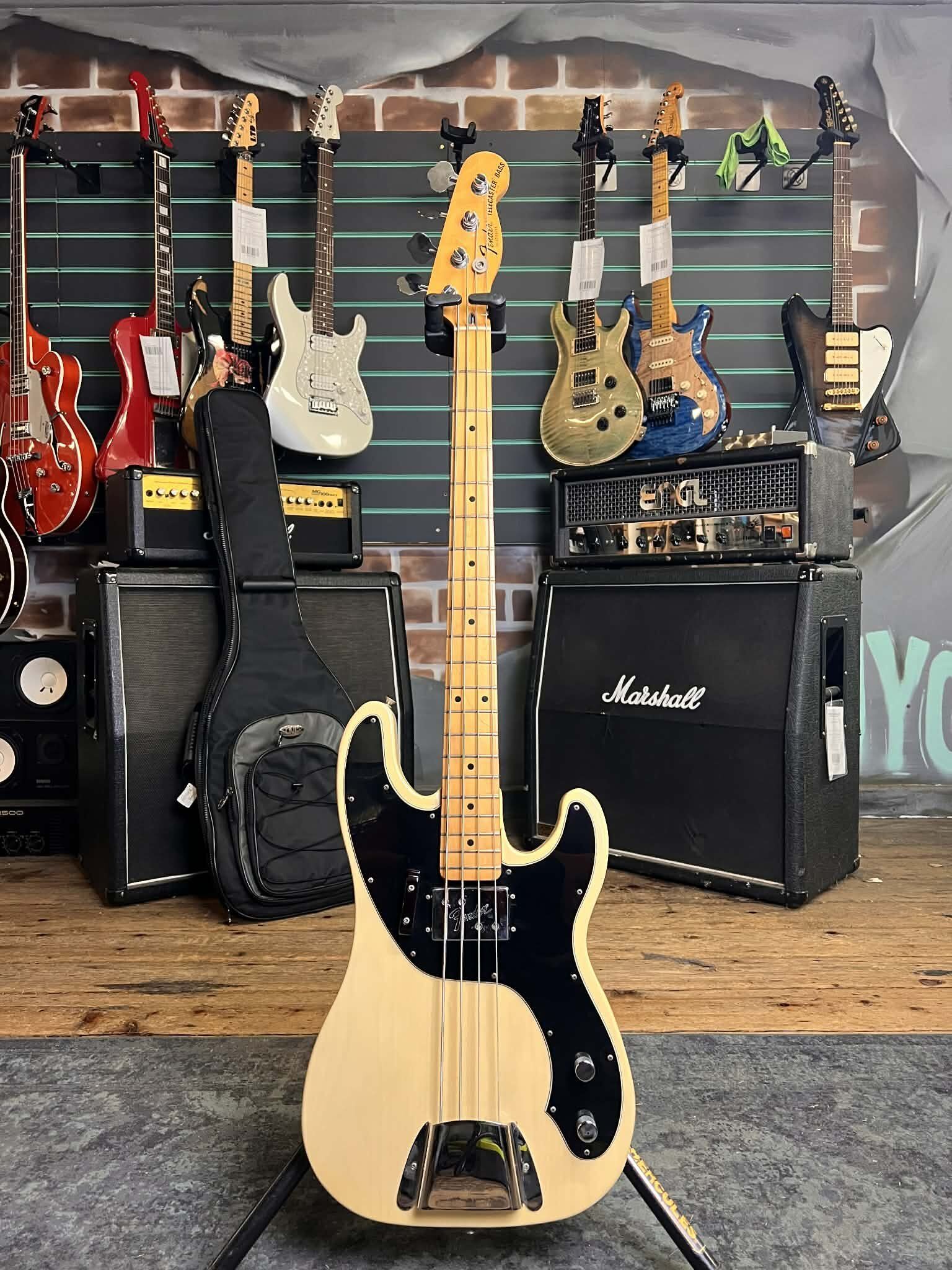
Fender Telecaster Bass Blonde 1977 Vintage Electric Bass Guitar Vintage Blonde - RefurbishedThis is a Fender Telecaster Bass in Blonde finish. Made in the USA in 1977, this bass comes from the second run of Telecaster Basses which were available from '71 up to their discontinuation in 1979. The original version was introduced in 1968, and was largely a reissue of the original Precision Bass, featuring Telecaster inspired features such as the small headstock, solitary single-coil pickup and separate control plate. In 1971 the design was updated to include some of the well-known CBS era appointments including the bullet truss rod nut and 3-bolt micro-tilt neck plate. Additionally the pickguard was re-designed to incorporate the controls and Fender's new Seth Lover-designed Wide Range pickup. The model was discontinued in '79, but has enjoyed several subsequent reissues as part of the Squier Vintage Modified series & Fender's Vintera II lineup. Naturally, a bolt-on construction is employed, and comprises an Ash body, Maple neck and 20 fret Maple fingerboard. Chrome hardware is fitted including a top-loading 4-saddle bridge with cover and Fender open-geared tuning machines. A Fender Wide Range Bass humbucking pickup is installed on the 3-ply black/white/black pickguard, and is wired to master volume & tone controls. The Maple neck plays very comfortably, with what might be described as a ‘U’ profile. This fillsthe hand reassuringly whilst still allowing for comfortable reach in all registers and promoting ergonomic thumb positioning. The double cutaway body design offers extended access into the upper register which works well with the gloss finish to the rear of the neck, allowing for smooth navigation of the 34” scale. The frets are on the larger size, feeling similar to modern medium jumbos. These feel great under the fingers, and provide the versatility required for a wide range of playing styles and techniques. The Wide Range Bass humbucker installed in this guitar had only been introduced in 1971, so the Telecaster bass was one of the first instruments to feature the pickup as factory standard. The Wide Range Bass humbucker makes use of 4 magnetised pole pieces rather than the bar magnet and screw arrangement of the Gibson PAF. Due to the difficulty of machining AlNiCo (Aluminium/Nickel/Cobalt) into threaded rod magnets, Fender chose to use CuNiFe magnets (Copper/Nickel/Iron) instead. As they produce less output than AlNiCo magnets, more windings were needed to produce enough output- resulting in a much larger enclosure than a typical humbucker. The tone is full-bodied and warm, filling out the bottom of the mix very nicely whilst still capturing all the snap and attack of your playing. A seriously cool instrument in astonishing condition. This is because between ‘77 and ‘78 Fender switched from using a string-thru bridge, to a top loading bridge. This means the body of the bass does not have holes and ferrules for a string-thru bridge. Please see the pictures of the body and neck attached to the listing. Luthier Report Our ID:...2470,00 £*Shipping: 0,00 £Secure redirect to the provider
-
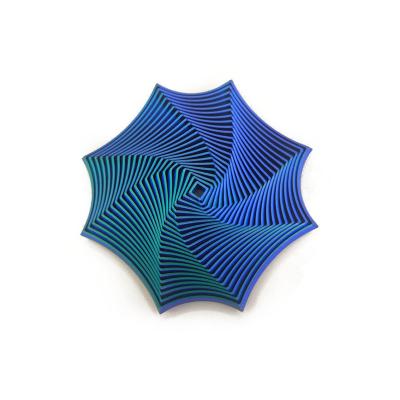
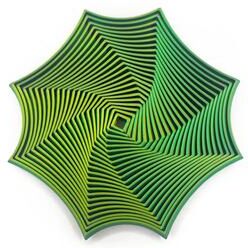
Youfap Market Fidget Octagonal Toy, 3D Printing Geometric Illusion, Sensory Stress Relief Toy For Parties blueRelax and Relieve Stress Introducing the Octagonal Fidget Toy, a stressrelieving tool designed to help you unwind and stay focused. With its 3D printing geometric illusion, this innovative fidget toy is perfect for sensory play, whether you are...34,97 $*Shipping: 0,00 $Secure redirect to the provider

-
What is 3D printing?
3D printing is a manufacturing process that creates three-dimensional objects by layering materials such as plastic, metal, or resin. It works by taking a digital 3D model and slicing it into thin horizontal layers, which are then printed layer by layer to form the final object. This technology allows for the creation of complex and customized objects that may be difficult or impossible to produce using traditional manufacturing methods. 3D printing has a wide range of applications, from prototyping and product development to medical and aerospace industries. **
-
How can guitar tuners be made from 3D printing?
Guitar tuners can be made from 3D printing by designing the tuner components using computer-aided design (CAD) software and then using a 3D printer to create the physical parts. The 3D printer would use a specific type of plastic or metal filament to build up the tuner components layer by layer, following the design specifications. This allows for customization of the tuner design and the ability to create complex shapes and intricate details that may be difficult to achieve with traditional manufacturing methods. Additionally, 3D printing can be a cost-effective and efficient way to produce small batches of custom guitar tuners. **
-
Does 3D printing have slots?
Yes, 3D printing can create slots in objects. Slots can be designed into the 3D model and then printed as part of the object. These slots can be used for various purposes such as connecting different parts of a 3D printed object, allowing for the insertion of other components, or creating mechanisms for movement or assembly. The design and dimensions of the slots can be customized to fit specific needs and requirements. **
-
How can one learn 3D modeling and 3D printing?
One can learn 3D modeling and 3D printing through a variety of resources such as online tutorials, courses, and books. There are many free and paid software options available for 3D modeling, such as Blender, Tinkercad, and Fusion 360, and many of these programs offer tutorials and documentation to help beginners get started. Additionally, there are numerous online platforms and communities where individuals can learn from others, ask questions, and share their work. For 3D printing, there are also online resources and courses that cover the basics of 3D printing technology, materials, and techniques. Finally, hands-on practice and experimentation are crucial for mastering 3D modeling and 3D printing. **
What is a 3D printing program?
A 3D printing program is a software application that is used to create and manipulate 3D models in order to prepare them for printing on a 3D printer. These programs allow users to design, modify, and optimize 3D models before sending them to the printer. They often include features such as slicing, support generation, and file preparation to ensure successful printing of the 3D object. Some popular 3D printing programs include Tinkercad, Fusion 360, and Simplify3D. **
What is a 3D printing company?
A 3D printing company is a business that specializes in creating physical objects by using a process called additive manufacturing, where layers of material are deposited on top of each other to build a 3D object. These companies typically offer services such as rapid prototyping, custom manufacturing, and small-scale production of parts and products. They use various types of 3D printing technologies and materials to cater to a wide range of industries and applications. **
Top-Angebote
Products related to 3D Printing:
-
Fender Precision Bass Black 1978 Vintage Electric Bass Guitar Vintage Black - RefurbishedThis is a Fender Precision Bass in Black finish. The Fender Precision bass was launched in 1951, and despite how ubiquitous it is today, actually took a few years to catch on. Electric bass guitars were a new concept at the time, and Leo Fender had to travel to jazz clubs & concert halls to promote his new instrument face to face with musicians. Several design modifications were made throughout the '50s before a major revision in '57. The headstock was changed to resemble the Stratocaster rather than the Telecaster it had originally, and the pickguard was also changed to echo the design of the Strat. The iconic split single-coil pickup was added and the bridge was changed to a top-loading design with four steel saddles. Aside from offering Rosewood fingerboard & different pickup options in the following years, the P Bass' design has remained largely unchanged since 1957, and has gone down in history as the first commercially successful bass guitar design, with an immeasurable impact in the world of music. Made in the USA in 1978, this bass comes from the height of Fender's CBS era. Whilst CBS made several small design tweaks to Fender's instruments, the P Bass remained largely unchanged save for the use of a polyurethane finish. It is clear that this particular example has stood the test of time, and has been well played & enjoyed throughout its 47 year life. Naturally, a bolt-on construction is employed and comprises an Alder body, Maple neck and 20 fret Maple fingerboard. Chrome hardware is fitted including a top-loading bridge & split-post open-geared tuning machines. A split single-coil pickup is installed and wired to master volume & tone controls. The Maple neck plays very well, with a profile which might be described as a smooth and even 'C' shape, perhaps slightly thicker than you might find on Fender's modern offerings. Paired with the 7.25" fingerboard radius, this bass has a genuinely vintage specification. Along with the finish wear from the years of playing this bass has seen, the instrument feels very inspiring in the hands. Certainly, this bass has a 'mojo' to it which is often imitated on modern instruments but never equalled. Deep, rumbling lows will fill out your mix, whilst punchy mids and a sparkly top end will ensure that you have plenty of snap and attack to provide a lively and percussive performance. pushing your bass playing forward in the mix to create more urgency in the sound. The controls keep things simple; not intruding on the playing experience but still offering ample opportunities for tone shaping. Rolling the tone control down darkens the sound nicely, allowing you to blend more easily into the mix for a more mellow, quite jazzy tone. A well-loved bass that has worked hard throughout it's life but still has plenty to give.1890,00 £*Shipping: 0,00 £Secure redirect to the provider
-
Fender Telecaster Bass Blonde 1977 Vintage Electric Bass Guitar Vintage Blonde - RefurbishedThis is a Fender Telecaster Bass in Blonde finish. Made in the USA in 1977, this bass comes from the second run of Telecaster Basses which were available from '71 up to their discontinuation in 1979. The original version was introduced in 1968, and was largely a reissue of the original Precision Bass, featuring Telecaster inspired features such as the small headstock, solitary single-coil pickup and separate control plate. In 1971 the design was updated to include some of the well-known CBS era appointments including the bullet truss rod nut and 3-bolt micro-tilt neck plate. Additionally the pickguard was re-designed to incorporate the controls and Fender's new Seth Lover-designed Wide Range pickup. The model was discontinued in '79, but has enjoyed several subsequent reissues as part of the Squier Vintage Modified series & Fender's Vintera II lineup. Naturally, a bolt-on construction is employed, and comprises an Ash body, Maple neck and 20 fret Maple fingerboard. Chrome hardware is fitted including a top-loading 4-saddle bridge with cover and Fender open-geared tuning machines. A Fender Wide Range Bass humbucking pickup is installed on the 3-ply black/white/black pickguard, and is wired to master volume & tone controls. The Maple neck plays very comfortably, with what might be described as a ‘U’ profile. This fillsthe hand reassuringly whilst still allowing for comfortable reach in all registers and promoting ergonomic thumb positioning. The double cutaway body design offers extended access into the upper register which works well with the gloss finish to the rear of the neck, allowing for smooth navigation of the 34” scale. The frets are on the larger size, feeling similar to modern medium jumbos. These feel great under the fingers, and provide the versatility required for a wide range of playing styles and techniques. The Wide Range Bass humbucker installed in this guitar had only been introduced in 1971, so the Telecaster bass was one of the first instruments to feature the pickup as factory standard. The Wide Range Bass humbucker makes use of 4 magnetised pole pieces rather than the bar magnet and screw arrangement of the Gibson PAF. Due to the difficulty of machining AlNiCo (Aluminium/Nickel/Cobalt) into threaded rod magnets, Fender chose to use CuNiFe magnets (Copper/Nickel/Iron) instead. As they produce less output than AlNiCo magnets, more windings were needed to produce enough output- resulting in a much larger enclosure than a typical humbucker. The tone is full-bodied and warm, filling out the bottom of the mix very nicely whilst still capturing all the snap and attack of your playing. A seriously cool instrument in astonishing condition. This is because between ‘77 and ‘78 Fender switched from using a string-thru bridge, to a top loading bridge. This means the body of the bass does not have holes and ferrules for a string-thru bridge. Please see the pictures of the body and neck attached to the listing. Luthier Report Our ID:...2470,00 £*Shipping: 0,00 £Secure redirect to the provider
-
What is the material guide for 3D printing?
The material guide for 3D printing provides information on the various types of materials that can be used for 3D printing, including plastics, metals, ceramics, and composites. It includes details on the properties of each material, such as strength, flexibility, and heat resistance, as well as their suitability for different types of 3D printing processes. The guide also offers recommendations for selecting the right material based on the specific requirements of the 3D printed object, such as durability, surface finish, and cost. Overall, the material guide helps users make informed decisions about the best material to use for their 3D printing projects. **
-
What destroys 3D printing?
Several factors can potentially destroy 3D printing, including poor quality materials, incorrect printing settings, and inadequate maintenance of the 3D printer. Using low-quality or incompatible materials can lead to clogs, jams, or other printing issues. Incorrect printing settings, such as improper temperature or speed, can result in failed prints or damage to the printer. Additionally, neglecting regular maintenance, such as cleaning and lubrication, can cause wear and tear on the printer components, leading to malfunctions or breakdowns. Therefore, it is essential to use high-quality materials, ensure proper printing settings, and maintain the 3D printer regularly to prevent potential damage. **
-
What is 3D printing?
3D printing is a manufacturing process that creates three-dimensional objects by layering materials such as plastic, metal, or resin. It works by taking a digital 3D model and slicing it into thin horizontal layers, which are then printed layer by layer to form the final object. This technology allows for the creation of complex and customized objects that may be difficult or impossible to produce using traditional manufacturing methods. 3D printing has a wide range of applications, from prototyping and product development to medical and aerospace industries. **
-
How can guitar tuners be made from 3D printing?
Guitar tuners can be made from 3D printing by designing the tuner components using computer-aided design (CAD) software and then using a 3D printer to create the physical parts. The 3D printer would use a specific type of plastic or metal filament to build up the tuner components layer by layer, following the design specifications. This allows for customization of the tuner design and the ability to create complex shapes and intricate details that may be difficult to achieve with traditional manufacturing methods. Additionally, 3D printing can be a cost-effective and efficient way to produce small batches of custom guitar tuners. **
Similar search terms for 3D Printing
-
Youfap Market Fidget Octagonal Toy, 3D Printing Geometric Illusion, Sensory Stress Relief Toy For Parties blueRelax and Relieve Stress Introducing the Octagonal Fidget Toy, a stressrelieving tool designed to help you unwind and stay focused. With its 3D printing geometric illusion, this innovative fidget toy is perfect for sensory play, whether you are...34,97 $*Shipping: 0,00 $Secure redirect to the provider
-
Youfap Market Fidget Octagonal Toy, 3D Printing Geometric Illusion, Sensory Stress Relief Toy For Parties greenRelax and Relieve Stress Introducing the Octagonal Fidget Toy, a stressrelieving tool designed to help you unwind and stay focused. With its 3D printing geometric illusion, this innovative fidget toy is perfect for sensory play, whether you are...34,97 $*Shipping: 0,00 $Secure redirect to the provider
-
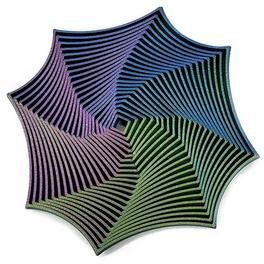
Youfap Market Fidget Octagonal Toy, 3D Printing Geometric Illusion, Sensory Stress Relief Toy For Parties colorfulRelax and Relieve Stress Introducing the Octagonal Fidget Toy, a stressrelieving tool designed to help you unwind and stay focused. With its 3D printing geometric illusion, this innovative fidget toy is perfect for sensory play, whether you are...34,97 $*Shipping: 0,00 $Secure redirect to the provider
-
Does 3D printing have slots?
Yes, 3D printing can create slots in objects. Slots can be designed into the 3D model and then printed as part of the object. These slots can be used for various purposes such as connecting different parts of a 3D printed object, allowing for the insertion of other components, or creating mechanisms for movement or assembly. The design and dimensions of the slots can be customized to fit specific needs and requirements. **
-
How can one learn 3D modeling and 3D printing?
One can learn 3D modeling and 3D printing through a variety of resources such as online tutorials, courses, and books. There are many free and paid software options available for 3D modeling, such as Blender, Tinkercad, and Fusion 360, and many of these programs offer tutorials and documentation to help beginners get started. Additionally, there are numerous online platforms and communities where individuals can learn from others, ask questions, and share their work. For 3D printing, there are also online resources and courses that cover the basics of 3D printing technology, materials, and techniques. Finally, hands-on practice and experimentation are crucial for mastering 3D modeling and 3D printing. **
-
What is a 3D printing program?
A 3D printing program is a software application that is used to create and manipulate 3D models in order to prepare them for printing on a 3D printer. These programs allow users to design, modify, and optimize 3D models before sending them to the printer. They often include features such as slicing, support generation, and file preparation to ensure successful printing of the 3D object. Some popular 3D printing programs include Tinkercad, Fusion 360, and Simplify3D. **
-
What is a 3D printing company?
A 3D printing company is a business that specializes in creating physical objects by using a process called additive manufacturing, where layers of material are deposited on top of each other to build a 3D object. These companies typically offer services such as rapid prototyping, custom manufacturing, and small-scale production of parts and products. They use various types of 3D printing technologies and materials to cater to a wide range of industries and applications. **
* All prices are inclusive of VAT and, if applicable, plus shipping costs. The offer information is based on the details provided by the respective shop and is updated through automated processes. Real-time updates do not occur, so deviations can occur in individual cases. ** Note: Parts of this content were created by AI.